Part 1: What is an Accelerometer?
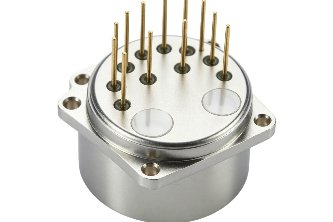
An accelerometer is an electronic sensor that measures proper acceleration—that is, the non-gravitational acceleration experienced by an object.MEMS accelerometer with high stability, low noise
 The Physics Principle
 The Physics Principle
At its core, an accelerometer measures changes in velocity (m/s^2). It outputs data across three perpendicular axes (X, Y, and Z), giving you a vector of acceleration in 3D space.
The Critical Distinction: Gravity vs. Acceleration
 The Critical Distinction: Gravity vs.
 This is the most crucial point to understand:
- When Stationary: If you hold an accelerometer perfectly still on a flat table, it will measure the force pulling you down towards the Earth. This constant reading is 1g (one times the acceleration due to gravity).
- When Accelerating: If you accelerate the device (e.g., throw it forward), the reading will show a deviation from the 1g reading. A reading of 1.5g means the device is experiencing an upward acceleration of 0.5g in addition to the pull of gravity.
In simple terms:
- Accelerometer measures: How hard or fast you are changing your speed or direction.
- Gyroscope measures: How fast you are rotating (angular speed).
Accelerometer vs. Gyroscope vs. IMU

| Sensor | What it Measures | Analogy | Primary Function |
|---|---|---|---|
| Accelerometer | Linear Acceleration(m/s^2) | How fast you are speeding up or braking. | Measuring force and impact. |
| Gyroscope | Angular Velocity(Degrees/second) | How fast you are turning or spinning. | Measuring rotation rate. |
| Magnetometer | Magnetic Field Strength (Degrees) | Which direction is magnetic North. | Determining compass direction. |
| IMU (Inertial Measurement Unit) | ALL THREE (Accel + Gyro + Mag) | A complete “sense of motion” for a device. | Accurate, stable attitude tracking. |
Part 2: Key Applications of Accelerometers
 Part 2: Key Applications of Accelerometers
Because they are highly sensitive to changes in motion, accelerometers are embedded in countless devices that need to know their orientation or impact state.
Automotive Industry
 Automotive Industry
- Airbag Deployment: Upon detecting a rapid, high-G deceleration (a crash event), the accelerometer triggers the airbag deployment sequence.
- Traction/Stability Control (ABS/ESC): They measure sudden wheel slip or excessive lateral (sideways) tilting, allowing the car’s electronic stability control system to automatically adjust brakes or throttle input.
Consumer Electronics & Wearables
 Consumer Electronics & Wearables
- Activity Tracking: Fitness trackers use them to count steps, detect running strides, or measure the intensity of physical labor.
- Fall Detection: In smartwatches or medical alert devices, a rapid change from a resting state to a sudden, sharp impact (and then no subsequent movement) can trigger an emergency alert.
- Gaming: Detecting rapid head movements or body gestures for immersive gaming controls.
Industrial & Civil Engineering
 Industrial & Civil Engineering
- Structural Health Monitoring: Sensors placed on bridges, buildings, or pipelines constantly monitor the accelerometer readings. Unusual patterns can indicate structural stress, settlement, or damage before it becomes visible to the naked eye.
- Vibration Analysis: Used in motors and machinery bearings to detect minute changes in vibration patterns that signal impending mechanical failure (predictive maintenance).
- Tilt Sensing: Simple tilt detection (e.g., ensuring a piece of equipment is perfectly level before use).
Aerospace & Defense
 Aerospace & Defense
- Angle of Attack Measurement: In aircraft, they measure how sharply the oncoming air is hitting the wing, critical for stability.
- Altitude and Pitch: Used in altimeters and attitude indicators to measure the angle relative to the ground or horizon.